Designing Urban Groceries
Consumers want them. Cities want them. Developers want them. Why are urban groceries so hot?
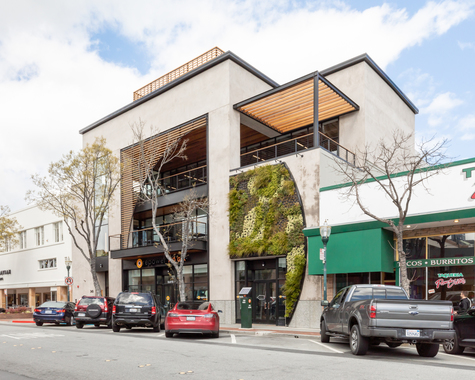
For one thing, the economic downturn has wiped out many small, independent groceries in cities like San Francisco. For another, the trend toward healthy urban living over the past decade means that there are a lot more people in and around downtowns who need and want to buy fresh groceries. So developers planning urban mixed-use projects are smart to include a grocery in the mix. And to bring the grocery tenant on board early.
Early means before securing entitlements so that building shell requirements for deliveries, parking, loading, exhausting fumes from cooking, and minimizing noise and vibration are part of the lease agreement, disclosed to the other tenants. and included in entitlement documents.
The biggest problem is noise, especially in stores close to (or directly underneath) residential units. Refrigeration equipment and mechanical units for a grocery store are huge—they’re heavy, they’re loud, and they vibrate—so early collaboration with acoustic and structural engineers is essential. Cooking exhaust adds an olfactory challenge. In mixed-use settings, a pollution control unit is necessary to filter and to exhaust cooking fumes, usually to the rooftop. Taking exhaust through the upper building floors requires a high degree of coordination with other tenants. In addition, the grease exhaust must be accessible from every floor in the building so it can be cleaned.
As above, so below: if there is structured parking below the store, make sure there is extra room for plumbing—a lot of plumbing. When urban grocers take over an existing space originally designed for a non-grocer tenant, they typically have to tear out the existing concrete slab to make room for equipment piping and to put insulated slabs beneath the freezers. Who pays for this work, the landlord or the grocer, has to be worked out ahead of time in the lease negotiation.
Design strategies for urban groceries are also different from those used for their suburban counterparts. With higher rents in urban areas, store square footage tends to be smaller, and efficient store layout is key. A variety of strategies including mechanical mezzanines and clustered and/or mobile employee workstations can be used to reduce back of house areas and maximize the size of the sales floor.
Then there is the fact that urban stores often have multiple entrances – one might be from underground parking, another from the main street corner, and a third along the secondary street frontage. Each entrance has to be considered for security, access to circulation aisles, and point of sales.

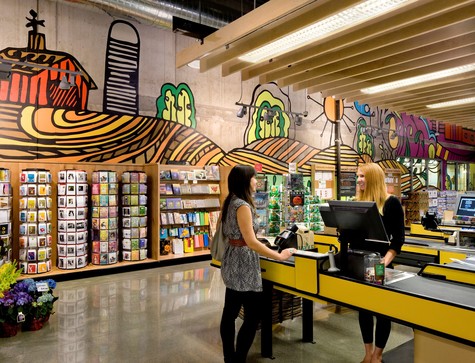
Shoppers in urban stores also tend to shop frequently, purchasing fewer items at any one time. To serve these customers, linear checkout stands can be the most efficient. As seen here at the Whole Foods Market on Stanyan Street, customers step forward to one of the illuminated checkout stands operated by the two long rows of cashiers.
None of these urban responses detract from the core market practice which is to provide fresh, often organically raised, often local food products. In fact, the smaller footprint can make displays more exuberant in a small, tight space that has a unique neighborhood market feel.
Related Articles