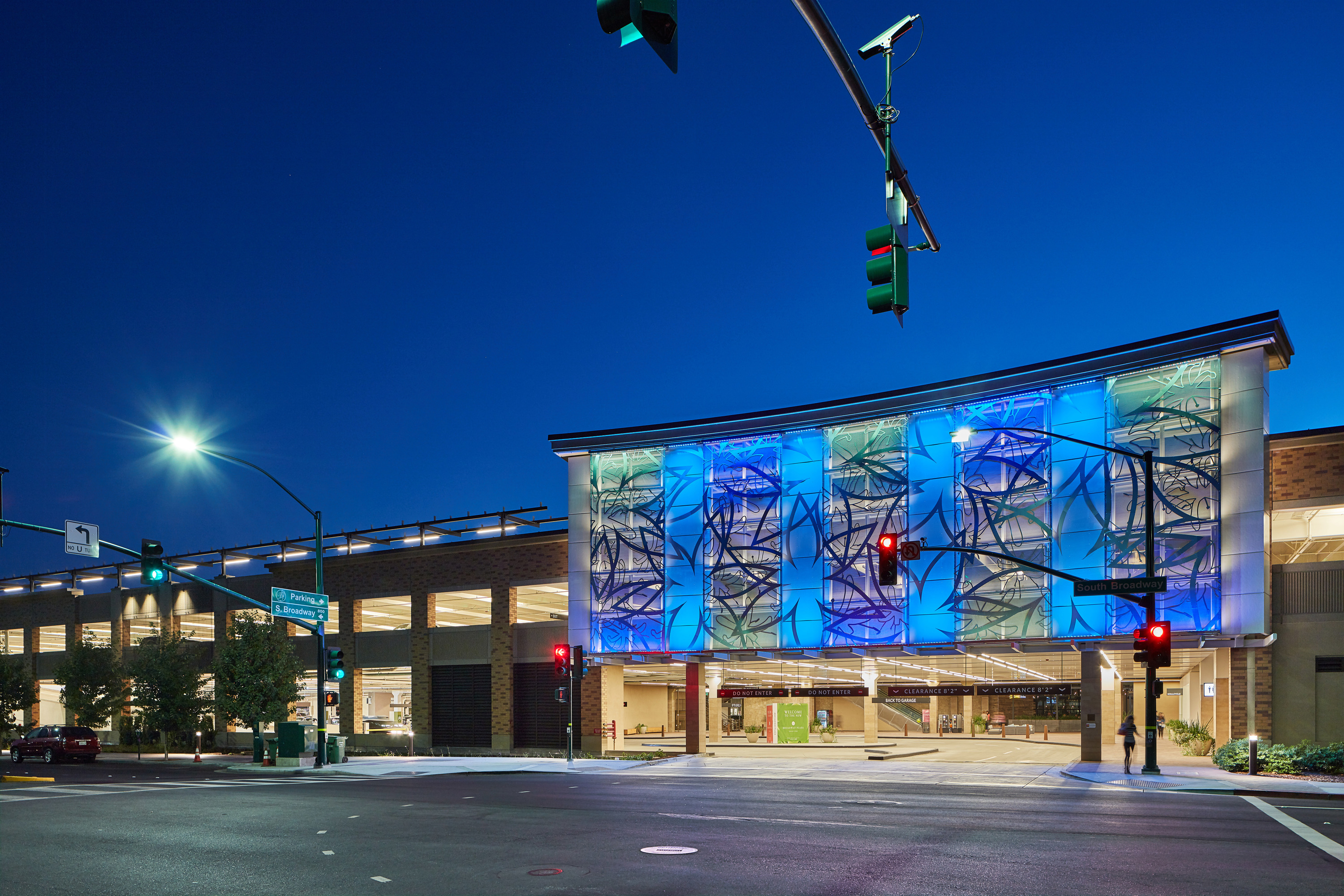
Retail Parking Changes Its Stripes
Bill Gates said, “We always overestimate the change that
will occur in the next two years and underestimate the change that will occur
in the next ten.”
While we do not fully understand the speed or scope of the change, we know change is upon us. There are major trends in the U.S. that indicate car ownership is down and younger people have different relationships with cars.
- In 1983, 87.3% of 19-year-olds had driver’s licenses, and in 2010, this number was down to 69.5%.
- In the 1960’s, car use was exploding, and it grew by 42%. In the 1980’s growth in car use slowed, but still grew by 23%. Between 1995 and 2005 growth was at 5%, and from 2010 to 2015, car use was flat.
- 70% of Uber’s customers are under the age of 34, and 56% of them live in cities.
Planning with Change In Mind
The decline in car ownership, along with the development of autonomous vehicles, or even semi-autonomous vehicles, is already impacting the way retail centers get developed and reimagined. Where infrastructure decisions are being made, being strategic about where main services come into the property will greatly impact the ability to be nimble in the future. While it may make sense from a first-cost perspective to lay a utility line in a straight shot across the parking field to the point of service, it will increase the cost of adaptability in the future.
Parking decks that are not easily repurposed for other uses could become the place where a self-parking car goes off to park itself after dropping passengers off. Without the need to open the car doors, the cars can park closer together, increasing the efficiency of parking and leaving the under-developed parking fields open for increased densification.
New drop-off and pick-up zones for ride share users and self-parking cars should figure into site planning exercises.
Currently, landlords are installing cameras and sensors to understand how their parking lots are used and to help customers find parking spaces. Not only does this increase customer satisfaction, but it also provides landlords with useful data about whether parking ratios on the site reflect customer need, informing decisions about which areas are underutilized and could be redeveloped as something that provides greater value to the community.
One of the greatest challenges is providing short-term parking for pick-up and delivery services such as Uber Eats, Postmates, and Grub Hub, as the drivers are independent contractors and may not be familiar with the retail center. The delivery people are not affiliated with the restaurant and so it has little influence over their behavior.
Pick up in-store also drives this demand for short term parking, but these are customers who, once at the center, may increase their dwell time with the right amenities.
A Regional Fit for the Future
Car ownership numbers are not uniform across the country, and this increases the need for retail centers to understand the demographics and psychographics of their visitors. The solution to the parking question will be as regional as the appropriate mix of tenants. Rather than the “one size fits all” approach to parking typical in many current centers, we will see more sophisticated solutions to parking and circulation that will include VIP parking, dedicated lots for self-parking cars, and multiple pick-up and drop-off areas for customers as well as food and merchandise.
Referenced reading:
https://www.motherjones.com/environment/2016/01/future-parking-self-driving-cars/
https://www.supplychaindive.com/news/last-mile-spotlight-trends-tech-gig-perfect/443091/