03.19.19
Winston Churchill on Architecture and Democracy (and why we need to keep frequenting bricks-and-mortar shops)
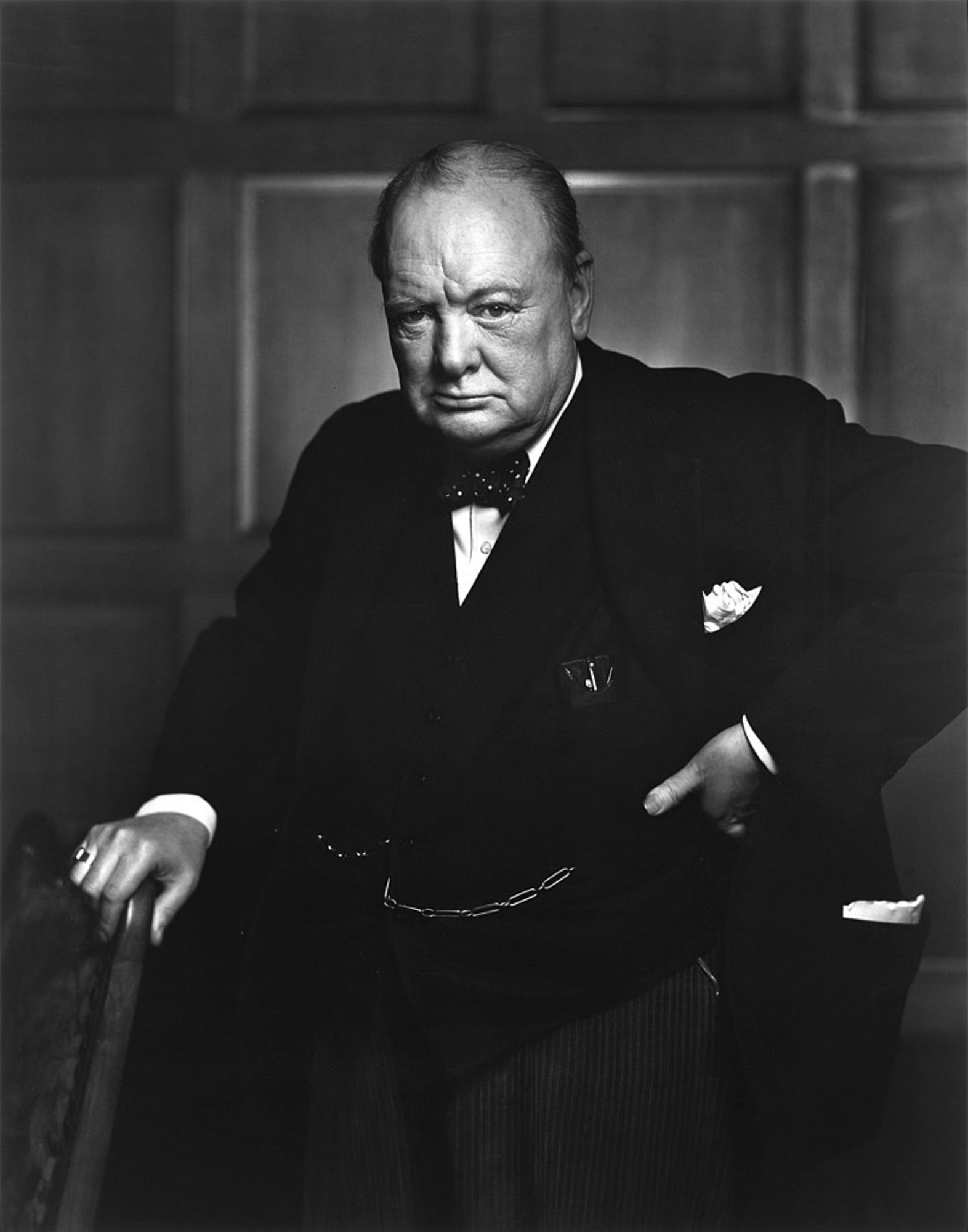
Yann TaylorWinston Churchill, recently brought back to life by John Lithgow in The Crown and Gary Oldman in Darkest Hour, was a master orator who left us with many memorable quotes. While his best known were made during wartime as he rallied his countrymen, two of my favorites are from his post-war years. Although seemingly unrelated, taken together they lead to some interesting insights about Architecture and Democracy.
"Democracy is the worst form of government.... except for all the other ones".
In this age of increasing authoritarian tendencies, Churchill's quote about democracy beautifully sums up the messiness and compromises of a form of government created in Ancient Greece and reinvented by America's founding fathers. Democracy is not about imposing a single truth or an absolute. It is about allowing competing viewpoints to co-exist, and the need to create necessary compromises through wheeling and dealing – a much derided activity known as politics. And yet so much more appealing than totalitarian alternatives such as Putin’s Russia and Maduro’s Venezuela.“We shape our buildings, and afterwards, our buildings shape us."


“We shape our buildings, and afterwards, our buildings shape us."
The appeal of this quote to architects is obvious - we all believe our buildings have a significant impact on their users, significant to the point of exerting an influence on their actions (and recent neuroscience-based research into the impacts of spatial environments is quantifying the relationship between place, perception and behavior). Churchill spoke these words as the government was considering how to rebuild the House of Commons following its destruction during the war.
The House of Commons’ original design was rectangular, with the party in power and the opposition party facing each other across an aisle. As the government contemplated adopting a semi-circular or horseshoe design (similar to the United States Congress or the original Bouleuterion in the Greek Agora) Churchill argued that straying from the original design would fundamentally change British Parliamentary democracy, which was based on verbal debate between opposing parties. The original design was retained, and today competing viewpoints continue across the aisle, with members of the opposing parties addressing each other as "the right honorable gentleman" or "the right honorable lady" prior to laying into each other with a verbal dexterity that would no doubt have kept Churchill entertained were he still alive today.
The Greek Agora – the bouleuterion is highlighted in red
The architectural design of the House of Commons the debate between alternative viewpoints and allows for that exchange to unfold before our eyes as a riveting spectacle. The layout of the space informs behaviors and attitudes and how they interact. Whereas an imperial space like the Palace of Versailles signalized the omnipotence of Louis XIV (not much point debating him!) and the centrally planned churches of the Renaissance symbolized divine truth, the spaces of democracy deliberately lack such focus. The Greek agora combined spaces for debate (the Bouleuterion), spaces for theatrical representation (the Odeon), spaces for worship (the temple of Ares and the Hephaisteon) and spaces for trade (4 marketplaces or stoas, one defining each side of the agora). It’s a vibrant ad hoc layout, reflecting society and its myriad activities. It is above all a space of exchange: not only for commercial goods but also ideas.
Does the development of the agora from a marketplace into a forum for the expression of democratic ideals suggest that democracy is rooted in the marketplace? Trading and haggling are common to both the marketplace and to politics. It is in the marketplace where we learn to coexist, and where we realize the we are mutually dependent. Consumers practice in democracy when they shop, voting with their pocketbooks, exercising a choice similar to ones they face at the voting booth. It is no coincidence that one of the greatest anti-authoritarian movements of recent times, the Arab Spring, was started in a Tunisian street market.
Taken together, Churchill’s quotes suggest that to shape and maintain our democracy, we need to build “democratic” spaces – and the prototype of the Agora suggests that the marketplaces of our towns and cities are exemplary democratic spaces. And just like the Athenian agora, the public spaces we create today continue to shape the fabric of our society. When interactions take place outside the context of a “real” physical space, these often quickly deteriorate: compare for example the civility of day to day encounters (typically between strangers) in interactive brick-and-mortar public spaces such as market stalls or retail stores to the verbal exchanges that we encounter on the internet, which so quickly devolve into spite filled rants. Some have said that lively public spaces help foster a sense of community – perhaps so, but equally importantly public spaces give us the opportunity interact and coexist with strangers, an important part of maintaining democratic norms. Commercial exchange fosters democratic ideals.
Field Paoli has for a number of years explored designs for the public realm - urban districts, markets, social hubs. These spaces bring together heterogeneous neighbors and create opportunities for shared experiences. We shape these spaces using the right mix of order and informality, of design and spontaneity, allowing their uses, whether retail, food, or entertainment, to bring people together from all walks of life. If the Ancient Greeks had done all their shopping online, they would not have had a physical agora, and they would not have invented democracy!
The House of Commons: a setting for the lively and civil exchange of competing viewpoints

Related Articles
12.02.19
If Architecture is Frozen Music, Should Retail Architecture be Frozen Muzak?
"Music is liquid
architecture; architecture is frozen music."— Johann Wolfgang von Goethe
The Oculus, Santiago
Calatrava's vast ribbed structure ...

11.22.19
Architecture from the Algorithm: Technology & Design Communication
Huy NguyenThis year’s AIA
California Monterey Design Conference was packed with inspirational
presentations on all sorts of timely topics. One stoo...
10.01.19
Change is Coming to a Grocery Near You
By Katherine
Blanner
Understanding
your customer has always been the bread-and-butter of the grocery business. Historically,
as grocery markets ex...