A two-and-a-half-hour drive from Mexico City, Cuernavaca is a mountainous, resort-like destination for domestic and international travelers, famous for its lush courtyard compounds. Over the years the city has been home to both the famous and the infamous: Hernan Cortes, Chicago mobster Sam Giancana, the Shah of Iran and psychedelic mushroom aficionado Timothy Leary have all been residents. Today, those seeking refuge there are primarily Mexico City's upper middle classes looking for a weekend escape from the city, attracted by the benign climate that has earned Cuernavaca its moniker of "the City of Eternal Spring."
Cuernavaca is however lacking in public gathering places - other than a small zocalo and an enclosed shopping center, the city does not have many areas to see and be seen in. A proposed retail development by Mexico City-based developer GICSA, Forum Cuernavaca, will rectify that by transforming a former textile factory complex into a retail and entertainment complex organized around a series of landscaped outdoor public spaces.

We were approached by GICSA because of our portfolio of outdoor retail centers, and were asked to visit the site in order to evaluate what could be done there. The context was like no other we'd seen before: a sprawling complex of a dozen or so abandoned concrete and steel buildings built over many years, nestled in a residential neighborhood. Many of the concrete buildings featured curved poured-in-place vaulted north-facing skylights; the more recent steel buildings were high bay spaces more typical of industrial buildings found in the United States.
Many retail projects today seem to be searching for an identity - the tenant mix and expression varying little from one place to the next. We therefore welcomed the unique setting with open arms: here was an opportunity to create something very different. Modernism and concrete construction became popular in Mexico beginning in the 1930s, and that’s reflected in the factory’s design. Our appreciation for the cavernous concrete curves and sawtooth features was shared by GICSA, especially the client lead, who is a former architect turned developer, and they agreed with our desire to make these architectural features a prominent part of the experience of being there.
Through selective demolition, depending on the quality and structure of the building, we applied different strategies to modify and adapt each building: in some cases roofs were removed to create open air paseos; elsewhere structural frames and vaulted concrete shells were left in place to provide trellis-like structures over new outdoor spaces.
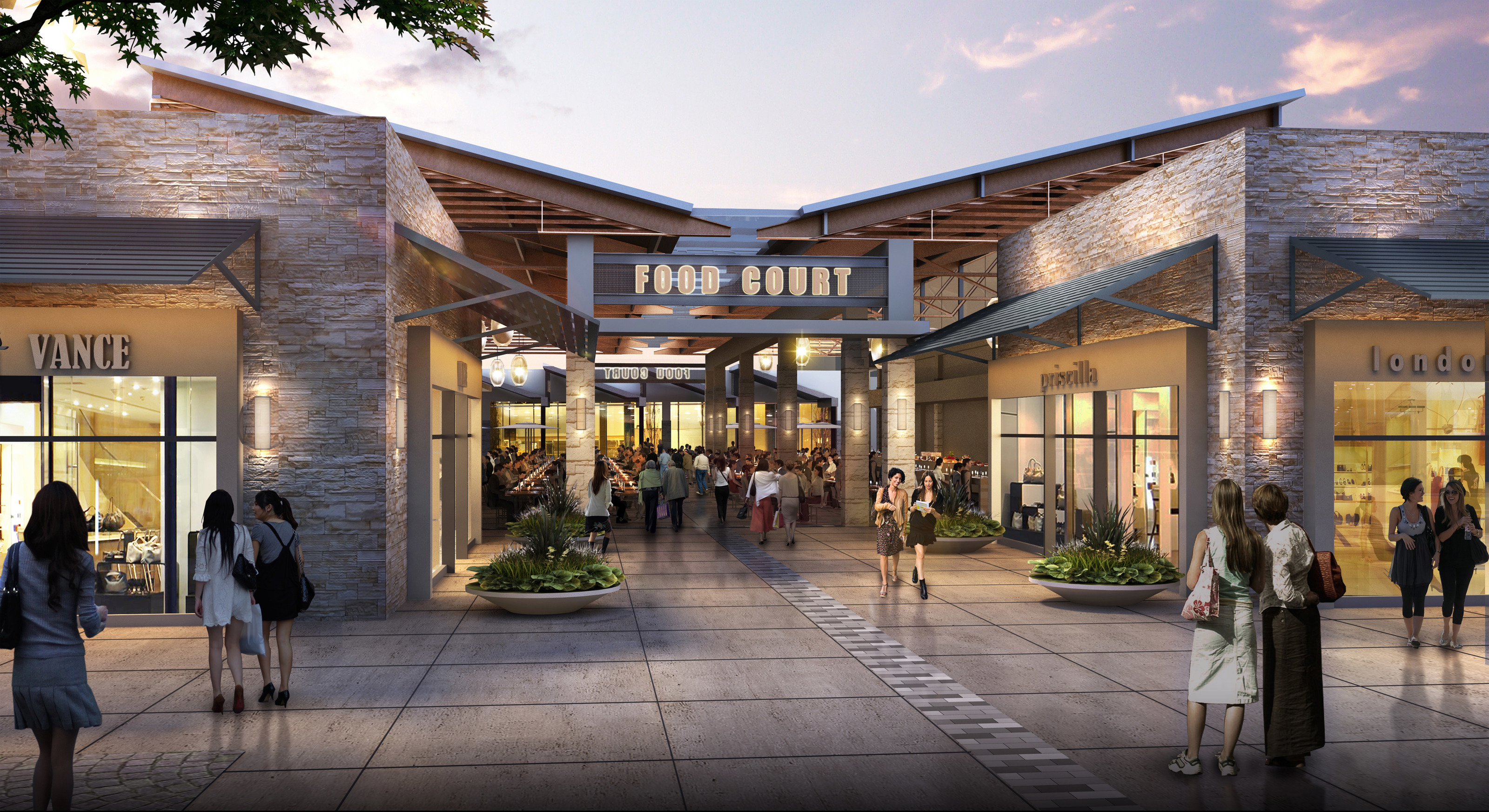
Rather than being perceived as a complex of stand alone buildings, the project now reads as a series of outdoor spaces featuring trees, benches, kiosks, fountains, outdoor dining patios, all framed by the existing factory buildings. The most significant architectural intervention is a new open food court that connects the project to a more natural garden-like area; large exposed ceiling trusses nod to the industrial aesthetic of the adjacent buildings. Oversized lanterns hang above tables and chairs; underfoot, brightly colored paving leads to the outdoor dining garden, a notable feature of many of the local higher end restaurants.

We are partnered with local architect Antonio Garcia, who has been indispensable since surveying and drawing up the conditions of all of the existing empty structures; he is also providing construction drawings. Environmental graphic design firm RSM Design was involved early on to create a brand identity, which layers a contemporary modernism onto the industrial vernacular. Dallas-based Studio Outside is the landscape architect, likely to be joined by a local landscape consultant for suitable native species specification. Theo Kondos is providing the lighting design. GICSA will handle the construction in addition to the development. Other developers and architects will design the hotel and residential uses.
Forum Cuernavaca reflects a break from the tradition of enclosed shopping malls in Mexico—a model imported from the United States. Especially given the temperate climate of the area, incorporating the outdoors just makes sense. Here, patrons transition to a pedestrian experience of outdoor plazas between modern retail spaces. Arcades throughout provide shade on hot days, and protect customers from the occasional rain showers.
Once the complex reopens in late 2016, the extensively refurbished "ruins" of the former factory will serve as a poetic reminder of the textile manufacturing history that once operated here, as well as providing a richly layered visual environment for retailers and their customers, unique to the area and to the region.
A virtual tour is available for viewing here.

Related Articles