Maker Movement: Playing Well with Others
There’s something compelling about physically making things. Most people know by now that the maker movement is a progression toward creativity and hands-on learning using advanced technologies to create physical things. The movement embraces all types of fabrication from wood, metal, glass, and plastics to food and beer. But an essential and sometimes forgotten aspect of this movement is a devotion to sharing. It is the sharing of skills, ideas, and creations that is helping the movement to grow at increasing rates, reaching all age groups, backgrounds, and interests.
The collaborative environment of a makerspace can be galvanizing – a catalyst for the development of skills, a trigger for creativity, and an expansion of one’s network of relationships.

The Adaptive Cup project was developed at Techshop, Public Glass, and Cotton Mill Studios by partners Katie Handy and Dinesh Perera utilizing 3d modeling, laser cut cardboard molds, and a pneumatic steel jig.
Over the past 10 years, I have participated in the maker movement through TechShop, The Crucible, Public Glass, and Cotton Mill Studios. In each of these spaces, I have learned from and been inspired by my peers, forming impromptu collaborations and building lasting relationships. More than just learning, making enables others to see what we’re exploring in progress, providing opportunities for questions, feedback, and assistance. As a designer who is constantly observing, critiquing, and mentally redesigning the space around me, I have picked up on several design choices that leverage sharing.

This stacked plywood room partition is built of 547 unique pieces cut on the ShopBot computer-controlled router at TechShop by partners Katie Handy and Dinesh Perera.
Observation #1: Collaborative equipment groupings and spatial adjacencies can encourage peer-guidance.
When I began working at TechShop, the laser cutters were laid out around the outside of the room with a central workspace. It was efficient layout, but when they switched the layout to group the machines in the center of the room, something magical happened: we started to take note of what was happening at the machine next to ours and we started to ask questions. We had come to TechShop to work independently, but we ended up teaching and learning from one another.

Beer artist Bryan Hermannsson built Pacific Brewing Laboratory out of his garage by sharing his brewing process with the community at free bi-monthly tasting events.
Observation #2: Concentrated resources and gathering spaces can result in cross-pollination.
Social environments embolden people to be more social. Shared spaces like computer labs and lounges provide an opportunity to build meaningful networks with people we might otherwise never cross paths with. While working at TechShop, I observed a maker building what looked like a squid, which peaked my interest enough to ask him about it. It turned out that he was CNC-Routing wooden tap handles for the brewery business he was building out of his garage. At the time, I was working on the construction of a tap room and was able to connect the maker and my client, resulting in his beer getting on the tap room’s menu.

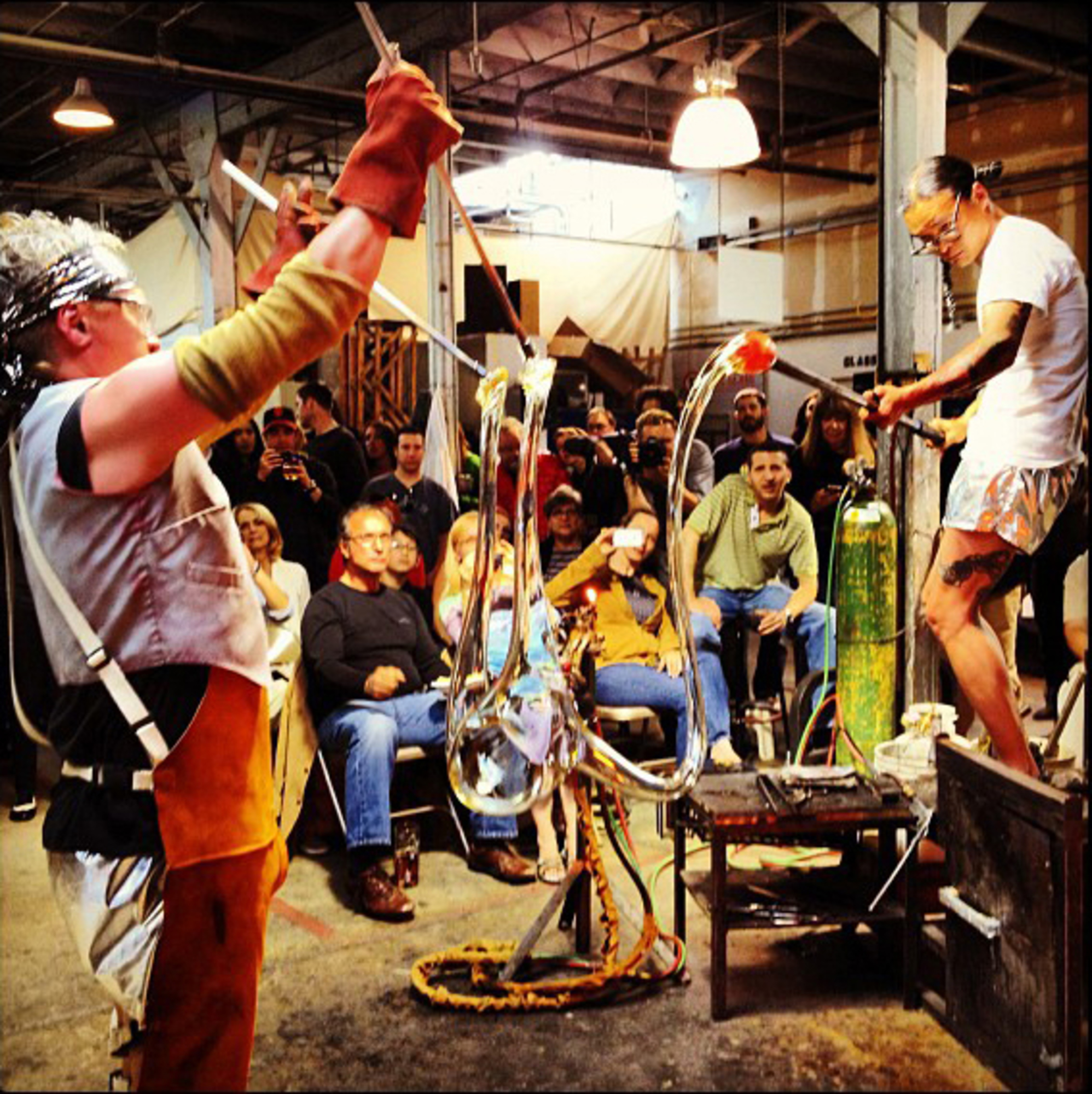
Glass artists demonstrate their collaborative process for a crowd at Hot Glass Cold Beer event at Public Glass.
Observation #3: Flexible spaces that allow for exhibition and presentation can empower members to share their voice.
I live in a work-live loft in Oakland filled with artists and makers, and a few years back, we decided to gather all of our work and throw an open studios event. With so many creative minds in the mix, the idea grew and grew until it was a quarterly art, fashion, and design event including a design bazaar, an art gallery, improv performances, a fashion runway show, and a group of food trucks in the parking lot. At the time, I had never before shared my work, but seeing what everyone else was contributing inspired me to open up my studio.
I initially joined these spaces to gain access to advanced tech tools, to have a space to get dirty and work with my hands, and to learn new skills. But what I’ve gotten out of them is so much more – an opportunity to be inspired by others, to share my skills, ideas and creations with a receptive audience, and to build a lasting network of connections out of which inspired new projects and collaborations have formed. I’ve learned that the design of these spaces is critical for creating connections and cultivating creativity among individual makers, producing inspiration and growth in this exciting new community.
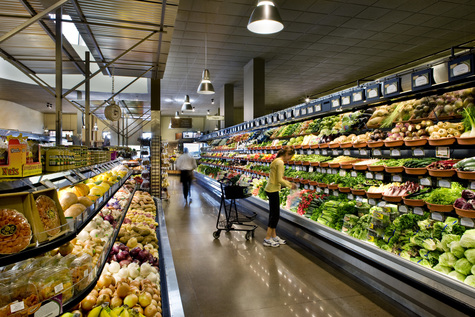
Katie Handy is an Associate at Field Paoli and has worked on a variety of projects ranging from to large retail centers to custom bulk food fixtures at Whole Foods Market.
Related Articles