In development circles, mixed-use development is often maligned as “mixed-up use,” or, more generously, “shared-use.” This is because mixed-use design requires careful planning and coordination. However, in the long run, mixed-use is worth the extra time because it optimizes the site, which can result in greater returns—for the developers and for the community.
Field Paoli asked mixed-use development expert Stan
Laegreid, Senior Vice President of Design with Bellevue-based Kemper
Development, to weigh in on the decision-making process surrounding mixed-use.
Are the various uses going to be separated horizontally, or vertically?
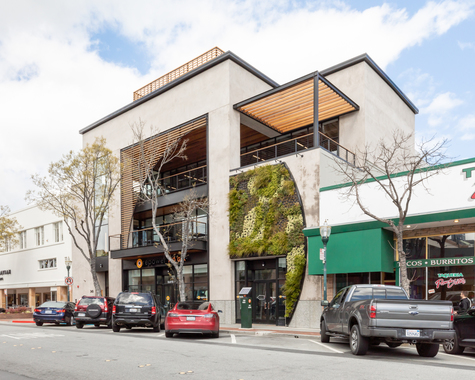
This is the root question. Everything else follows. True mixed-use is vertical. That means at least two uses in the same building.
However, most American developers have preferred to segregate uses horizontally. One building holds office tenants, another hotel operators, a third has restaurants and food service, a fourth gathers the retail tenants along some kind of street. Housing often serves as a buffer around the commercial center.
It’s true that American developers, being industry driven, are used to their own areas of expertise and so are hesitant to mix it up, which often means taking on a partner. Horizontally dividing up the site allows for an easy sell-off of individual properties, which gives developers much greater flexibility. Insurers are also a factor. For example, they prefer not to cover residential uses over retail or food services. Although, it’s easier to spread out, we are running out of inexpensive land—all the easy sites are taken. Plus, brick and mortar retail thrives on the dynamism and excitement of real mixed-use.
Will the mix of uses generate community support?
The most desirable sites for mixed-use projects are often in cities with complex approvals processes. Different voices in the community will express different needs. While it is important to gather together a team of professionals who know how to work with community groups and governments, it is also important to figure out how your mix of uses will benefit the local community by serving as a community asset, a place where the community exercises its identity.
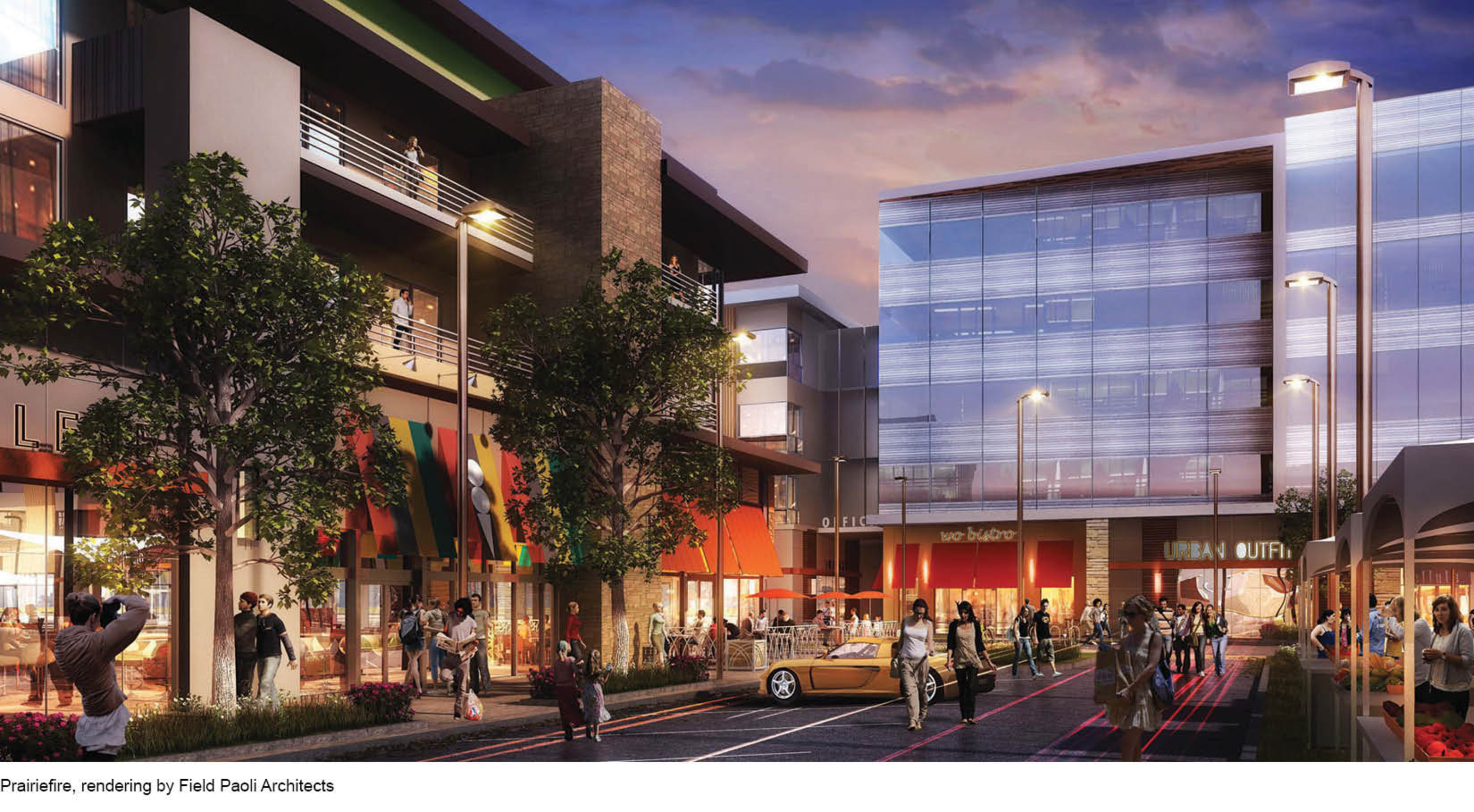
For example, the mixed-use retail entertainment center Prairiefire in Overland Park, Kansas includes the Museum at Prairiefire, which hosts traveling exhibitions by the American Museum of Natural History, as well as a 6,000-square-foot local business incubator on the second floor of one of the retail buildings, accommodating a half dozen fashion boutiques operated by local designers. An integrated collection of uses with desirable public spaces will almost always be viewed as a community asset.
How is your location?
The old adage about real estate still holds true, but the definition of a good location is changing. Younger people want access to public transit, food, entertainment, and retail. In the Bay Area, we should be placing our densest mixed-use projects next to BART stations. It’s no longer always about automobiles and highway visibility! A great example is in Vancouver, where the municipality has deliberately encouraged the concentration of mixed-use around its SkyTrain transit system.
What will your brand identity be based on?
An abstract name is no longer enough. In Vancouver, mixed-use projects derive their identity from their location over public transit.
An exceptional public space like the one at Rockefeller Center also works. The brand should relate to the place that the target audience is hungry for.
How are your spaces organized?
Mixed-use and its attendant density can require a logical sequence of spaces rather than an oversimplified mall corridor. There should be a choreography of spaces—some surprises, some moments of solitude, some places to collect—but there should also be a community-inspired heart that people find memorable.
Are you densifying suburbia?
Sophisticated young urban workers are moving to suburbia because high-demand cities are too expensive. They also want to be close to work and schools, and they still want amenities traditionally associated with the nearby city. That demand drives the densification of suburbia. There is enthusiasm for community spaces where people can collect and connect. This doesn’t exist in outmoded dumbbell malls.
Are you focused on long-term value?
The demand for authentic mixed-use is there, but the perspective is often fragmented in the United States. Publicly-traded companies face the intense pressure of quarterly returns, which inhibits innovation.
Santana Row did not make immediate returns. But in the long run, it has added dramatic value to nearby properties. In the United States, investors from Asia and the Arab states have been less hampered by the need for short-term gains as they look to long-term value. Mixed-use is not for flipping properties. It requires a long-term perspective.
What kind of litmus test should be used for determining the uses?
The answer lies in another question that I learned from Gerald Hines, Jr: would the use thrive on its own at this site? If not, then it probably isn’t something that would do that well in the mix.
Can you collaborate with another kind of developer and be patient?
Retail, office, and housing developers have to work together for real mixed-use. Non-American developers want to maximize the value of the land, while American developers have been focused on the fastest return.
Outside of the United States, more developers see a real estate asset as more than a project type. The same is true with investors. The Wilshire Grand in downtown Los Angeles, which is the tallest building in the city (and the ninth tallest in the United States), consisting of office, hotel, residential, and retail uses, is being financed by Cho Yang-ho, chairman of Korean Air.

CityCenter, on the Las Vegas strip, happened because of foreign investors from Dubai and Germany who took the long view. The resurgence of Miami is primarily due to the influx of investment arriving from south of the border—all the way from Chile. Foreign investors have the luxury of taking the long view, because they don’t have to respond as immediately to quarterly earnings.
What is going to happen in the future?
The future brings change. Developers and their architects must be nimble and flexible. You might have to build an office building where you thought there was going to be a hotel serving a convention center. I saw this happen in Bellevue, Washington where the developer had to convert the hotel footprint to work for an office footprint. The two final towers were converted to residential uses. In Vancouver, the design team worked with the developer to take an oversized department store and turn it into a Nordstrom on three floors and Microsoft offices on the other three floors. Flexible large floor plates that can offer hospitality-type amenities are in demand. The relatively new WeWork concept has created a whole new niche market for larger floor plates, and that is transforming many new projects.
As land values continue to rise and space becomes scarce in desirable urban markets, mixed-use development makes more and more sense, despite the complexities. The next time you happen to walk by Hudson Yards in west Manhattan, you can only begin to appreciate the complexities that the developers have navigated to create this powerful destination, a new New York City beacon.
Developers, investors, and insurers need to break away from their conventional methods of doing things and negotiate new ways of collaborating with each other and with municipalities. The large publicly traded REITs won’t be leading the way here. It remains for privately-owned and smaller companies to blaze a trail and commit to the long-term returns that mixed-use development promises.